Skip to content
Dawn light over working farmland

My Strategy. My Sustainability.

From many routes, many peaks. To one climb, one destination.

New SHERPA turns the many standards your market demands into one plan, one audit-ready register, and one honest score you own — and can report your progress against.

Complete once. Comply everywhere. Improve continuously.

Multiple
standards, benchmarked to one framework
Hundreds
of control points between them
One
harmonised master set to prepare
Most
of the work was the same question twice
01 · What is SHERPA

The sustainability operating system for a farming business

Himalayan Sherpas are the renowned guides who make it possible for mountaineers to prevail in the most challenging conditions imaginable, and to conquer the highest mountains in the world. In the same way, SHERPA expertly guides your farm on the complex journey to true, lasting resilience, viability and sustainability.

SHERPA is an integrated online management system built for owners, managers and management teams within agricultural supply chains. It supports and empowers you in developing and implementing proactive, relevant and impactful sustainability strategies for your farm, with the compliance trap handled along the way.

It takes everything the compliance world asks of you — the standards, the audits, the corrective actions, the evidence — and organises it into a single system that works for the business rather than for the auditor.

Where certification gives you a pass mark, SHERPA gives you a picture: how the business is performing across the subjects of sustainability, where it is improving, where the gaps are, and what is being done about them. It is built on Blue North’s benchmarking of every major agricultural standard onto one framework, and it unlocks the information your business already generates. It does not ask you to produce anything you were not already producing.

SHERPA is not another standard. It is the one place they all resolve to.

02 · The trap

The trap you know too well

Duplicated effort. Fragmented systems. No shared truth. Every buyer, every market, every scheme wants the same evidence in a different shape, and you answer it all, again and again.

A farmer’s hands holding ripe citrus
One farm, one record

Evidence gathered once.

The work of the land, held to one clear standard.

One process, one management view

Multiple sources, multiple standards, one coherent strategic process.

Multiple sources, multiple standards, multiple reporting obligations — resolved into one coherent strategic process that simplifies compliance management and returns strategic value to the farm instead of consuming it.

The same work produces a normalised reporting framework — one basis of measurement, so results compare across business units, seasons and whichever standards a farm holds.

Three outputs make up the management view: where the farm stands, the performance behind it, and what is being done about the gap. One picture for decision-makers, instead of a stack of audit reports in different languages.

Shareable with retailers, funders and certifiers through SHERPA’s reporting platform — at the farm’s discretion, never by default.

Sustainability Scores

One normalised score across economic, social and environmental performance, with the stage that earned every point traceable behind it.

Performance Indicator Results

Measured outcomes by annual cycle, per enterprise and per commodity, with the trend and the rate of change.

Improvement Plans

What has been committed to, who owns it, when it is due, and what will prove it was done.

Certified
Blue North is fully compliant with, and certified against, the Farm Data Principles.

Data entered stays owned and controlled by the farm that entered it. Sharing is switched on deliberately, per recipient and per output, and switched off the same way. Nothing leaves because a standard, a customer or SHERPA would find it convenient.

03 · The engine

Compliance has become a workload, not an outcome

Multiple standards. Many hundreds of control points. Most of them asking the same question in different words, answered again every year for each auditor, at real cost in time, money and management attention. And at the end of it you hold certificates — not a strategy.

Two innovations change that. They run in sequence, and the sequence is the point.

A

Harmonisation — do the work once

Harmonisation collapses your chosen standards into a single master set. Every item in that set knows which standards it satisfies, so one preparation is every audit’s preparation. The compliance trap — the same work, repeated, for diminishing return — is broken at the source.

For a business holding several standards, many hundreds of control points become a master set a fraction of the size, with most of the duplicated work removed before preparation begins. The more standards you hold, the more there is to remove.

B

SHERPA Scoring — score what is real

Scoring reads what your audits, corrective actions, performance indicators and your own evidence say, and places all of it on one framework: every subject, every question type, every cell. The score is the most rigorous tier you have actually reached — demonstrated, prepared or self-declared — never a number that flatters.

A third-party audit outranks anything self-declared, so the score reflects what can be demonstrated. Full compliance with every selected standard reaches only part of the framework; everything above that line is where your business gets ahead — on the same scale, under the same evidence rules.

Underneath both sits Blue North’s proprietary benchmarking methodology — reading each control point of each standard and placing it against the subject and question type it genuinely addresses. Neither the collapse nor the score is possible without it, and it is what makes the results comparable rather than merely tidy.

One process. Your strategy.

Harmonise, then score, then act, then report — one coherent process, with the business in full ownership at every step. The standards stop setting your agenda and start feeding it. What you choose to work on, how far above the ceiling you climb, and what you tell your buyers becomes your sustainability strategy, not a by-product of somebody else’s audit calendar.

Resilience is the outcome. A business that knows where it stands, owns its evidence, and directs its own improvement is one that absorbs the next standard, the next buyer requirement and the next bad season without starting again.

Compliance is the foundation, not the ceiling on ambition. Every standard a business could hold, taken together, still reaches only part of the framework — not through any failing, but because no standard asks about the rest. Certification sets a floor; SHERPA is built to describe the whole farm.

04 · The journey

Two journeys. Four stages. One climb.

The journey has two parts. Manage Compliance holds Harmonise — the Prepare step — and Comply — the Audits step. Beyond Compliance is the Assess step, the farm’s own voice in two modes: Self Manage while no standard is selected, Go Beyond once one is. On any cell, an audit finding outranks the farm’s own answer, which outranks preparation — which is why the score can go down, and why it is worth something when it goes up.

1

Self Manage

Beyond Compliance · Assess, before any standard

Your own assessment, before any standard

With no standard selected, Assess is a voluntary self-assessment: answer the whole framework as it stands for the farm today, with nothing required of you and no ceiling. It is where a business finds its feet before a certifier ever asks.

2

Harmonise

Manage Compliance · Prepare

Prepare once, for every audit

Your chosen standards collapse into one master set of requirements. Work through it on Prepare, hand it out to the team, and every audit ahead of you is prepared for at the same time.

3

Comply

Manage Compliance · Audits

What the audits actually found

Record each report on Audits, control point by control point. Findings resolve onto the framework, raise the corrective work they imply, and set the compliance floor the score stands on.

4

Go Beyond

Beyond Compliance · Assess, with standards selected

Above the ceiling, on your own terms

Once standards are in play, Assess turns to the cells they do not reach — the opportunities. Answer them on the same scale, with evidence behind every Yes, and the score climbs past what compliance alone can reach.

The four elements

And the cycle never stops.

Score, Measure, Act and Report are not four more steps after the four stages. They are what you work at every stage, every season, around one register the farm owns. An audit is a moment; sustainability is a cycle.

Score

Where the business stands, across every subject of sustainability — cut by pillar, principle, focus area and subject.

Measure

Your own numbers, collected on your own cycles, turned into indicators that show which way each one is moving.

Act

The improvement work: raised, owned, dated and closed, from the audit findings and from what you choose to take on.

Report

The strategic view for your management team, and what you choose to send to your buyers — never by default.

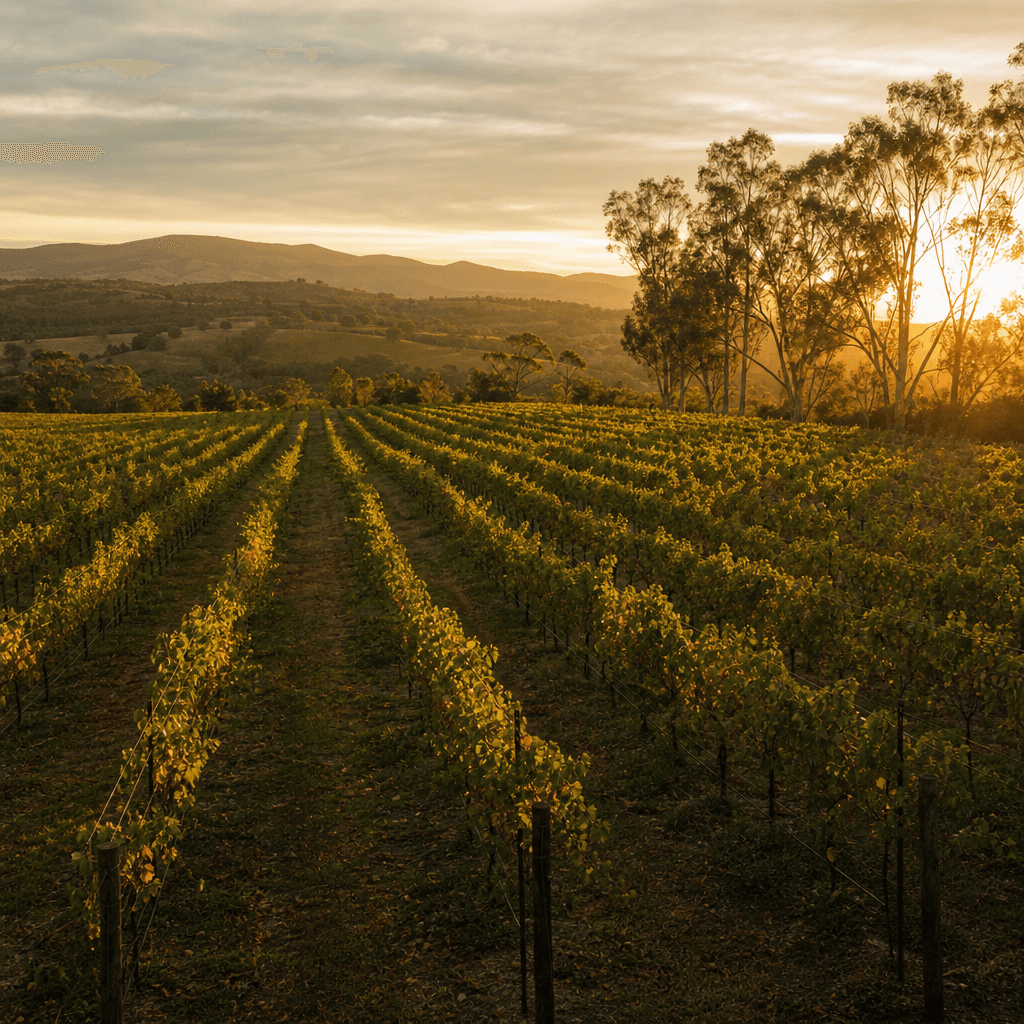
Rows of grapevines at golden hour
One register

Every row accounted for.

From the vine to the audit trail: a single line of truth.

05 · What you gain

One system. Your whole strategy.

Compliance is where SHERPA starts, not where it ends. Six things change when the whole sustainability agenda lives in one place.

01

One preparation, every audit

Prepare against the harmonised master set and walk into any audit ready — without answering the same question in four different shapes.

02

A register you own

Practices, documents, monitoring and checklists, organised once, reused every year, carrying evidence forward instead of rebuilding it.

03

A score you can trust and defend

Tiered, evidence-based, and transparent about what has been demonstrated against what has been prepared or merely declared.

04

Headroom, not just a pass mark

See the gaps no standard asks about, and work on them on the same scale — without standing up a second system to do it.

05

Measurement that survives a real farm

A handful of inputs drive the performance formulas and give you energy, water and carbon intensity by enterprise and by commodity.

06

A team that knows where it stands

The score tracks capacity as much as performance — what the business can manage, not only what it has achieved. Work is assigned, owned and tracked to close-out.

For your buyers

A certificate says a farm passed. SHERPA says how it is performing, where it is improving, what intensity sits behind each product supplied, and which of those claims are audited, prepared or self-declared.

Upstream data a retailer can actually use — for Scope 3, for sourcing decisions, and for the story it tells its own customers. Sent because the farm chose to send it, in the shape the farm chose to send it.

The numbers

Your own standards decide your own numbers — SHERPA computes them live from Blue North’s benchmarking once your business is set up.

Hundreds → one

Control points across your standards, harmonised into one master set

Most

Of the duplicated work removed before preparation starts

One framework

Every standard resolves onto the same subjects, question types and cells

A ceiling

The most compliance alone can reach. Everything above it is yours

12

Farm inputs that drive the performance indicator formulas

06 · Packages

Start with an assessment. Build from there.

Start with a free assessment. Verify your email, name your business unit and choose its country. No payment method is needed.

Add your team, standards and other business details as you go. Compare the available packages to see which features are included. Payment and activation details are shown before you confirm a purchase.

Compare packages
Support · Training

You’re guided the whole way.

The team behind SHERPA stays within reach. Talk to a SHERPA expert about getting started, developing your sustainability strategy or supporting your team.

FAQ

Asked, answered

Is SHERPA another standard I have to comply with?

No. SHERPA is the framework the standards resolve to, not a new one added on top. You choose the standards your buyers require; SHERPA organises the work of meeting them, and shows you what they do and do not cover.

Which standards does it harmonise?

The major agricultural and ethical-trade standards a farming business is asked to hold are benchmarked to the SHERPA framework, with more added as the corpus grows. Your business configuration determines which are available to you.

Does harmonisation mean I skip parts of an audit?

No. Every control point in every standard you select is still satisfied. Harmonisation removes the duplication in the preparation, not the requirement. The auditor sees a fully prepared business; you did the work once.

Can my score go down?

Yes, and that is deliberate. The score is the most rigorous tier you have reached — demonstrated beats prepared beats self-declared — never a sum of everything claimed. A first audit can lower a number that was previously self-declared. That honesty is what makes the score worth something to a buyer.

What does "the ceiling" mean?

Full compliance with every standard a business could hold still reaches only part of the SHERPA framework. The ceiling is the highest score standards alone can produce — not a failing of the standards, but a fact about what they ask. Above it is where a business improves on its own terms, and SHERPA lets you do that on the same scale, under the same evidence rules.

Do I have to use standards at all?

No. SHERPA can be run as a purely voluntary self-assessment, indicator and improvement-planning tool, with no standards attached and no ceiling. Most businesses use both tracks.

Who sees my data?

You do. Reporting to buyers and stakeholders is something you choose to send, with control over what is shared. SHERPA unlocks information your business already generates; it does not extract it. Blue North is certified against the Farm Data Principles — your data is your data, nothing is shared without your specific permission, and permission can be revoked in full.

What do I need to get started?

A description of your business — activities, commodities, operations — and the standards you are certified to or working towards. Existing audit reports can be uploaded and read directly into the system.

Who is behind SHERPA?

Blue North, an agri-food sustainability consultancy and technology business based in Stellenbosch, South Africa, working with growers, exporters and retailers since 2011.

Blue North Sustainability

Talk to us.

Whether you run a farm, a packhouse or a whole compliance programme, the team behind SHERPA is a message away.

Email the team

support@bluenorth.co.za

Already using SHERPA?

Continue working with your organisation, business units and team.

Log in